Test Sequencer
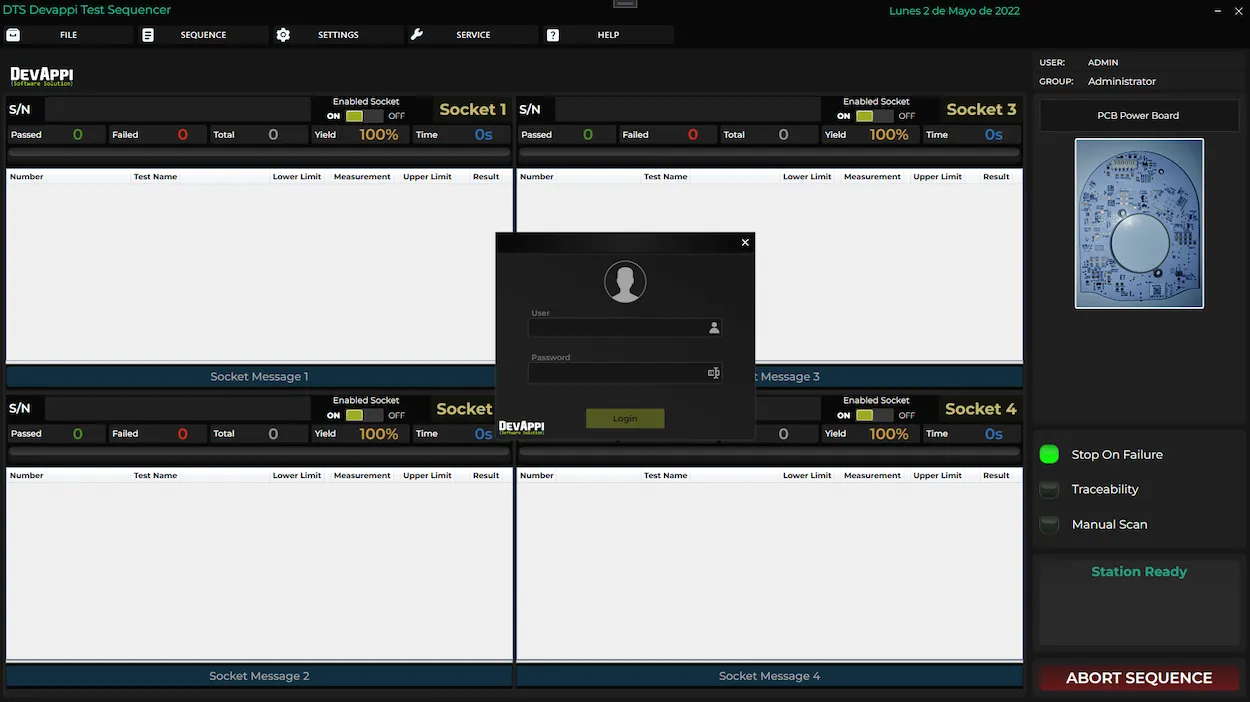
A desktop engineering software built to automate and manage functional quality testing for electronic circuit boards and devices.

Executes custom, sequential test routines systematically to evaluate voltage, signal tolerances, and digital responses across hardware components under test.
Ensures high-throughput product reliability, standardizing assembly line diagnostics while logging execution telemetry to a centralized database.
01.THE CHALLENGE
Manual functional testing of electronic printed circuit boards (PCBs) was time-consuming, highly vulnerable to operator diagnostic errors, and lacked automated, standardized test data collection for manufacturing quality analytics.
02.THE SOLUTION
Developed a high-performance C# desktop application in .NET with WPF using the MVVM pattern. Built a multi-threaded sequence engine to control test fixtures via hardware protocols (Serial/USB), validate signal tolerances in real time, and persist structured pass/fail log data directly to a relational database.
03.ARCHITECTURE & DESIGN
- ▹MVVM (Model-View-ViewModel) architectural pattern for clean separation of UI components and hardware execution logic.
- ▹Multi-threaded execution engine enabling non-blocking asynchronous test execution and UI responsiveness.
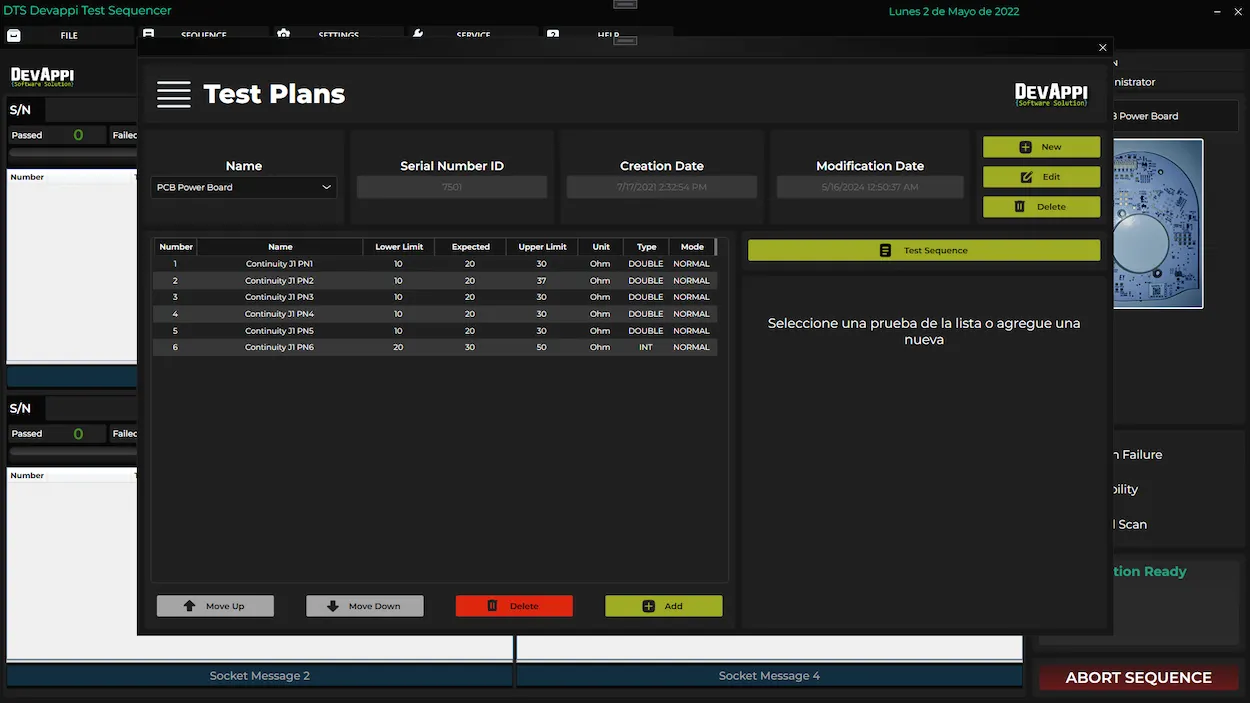
- ▹Custom test sequence interpreter engine capable of processing step parameters, delay timers, and signal tolerance ranges.
- ▹Database persistence layer storing full telemetry logs, timestamps, operator IDs, and Device Under Test (DUT) serial numbers.
04.KEY FEATURES
- ⚡Customizable step-by-step test sequence execution engine with configurable pass/fail criteria.
- ⚡Hardware instrument integration via serial communication protocols for real-time telemetry acquisition.
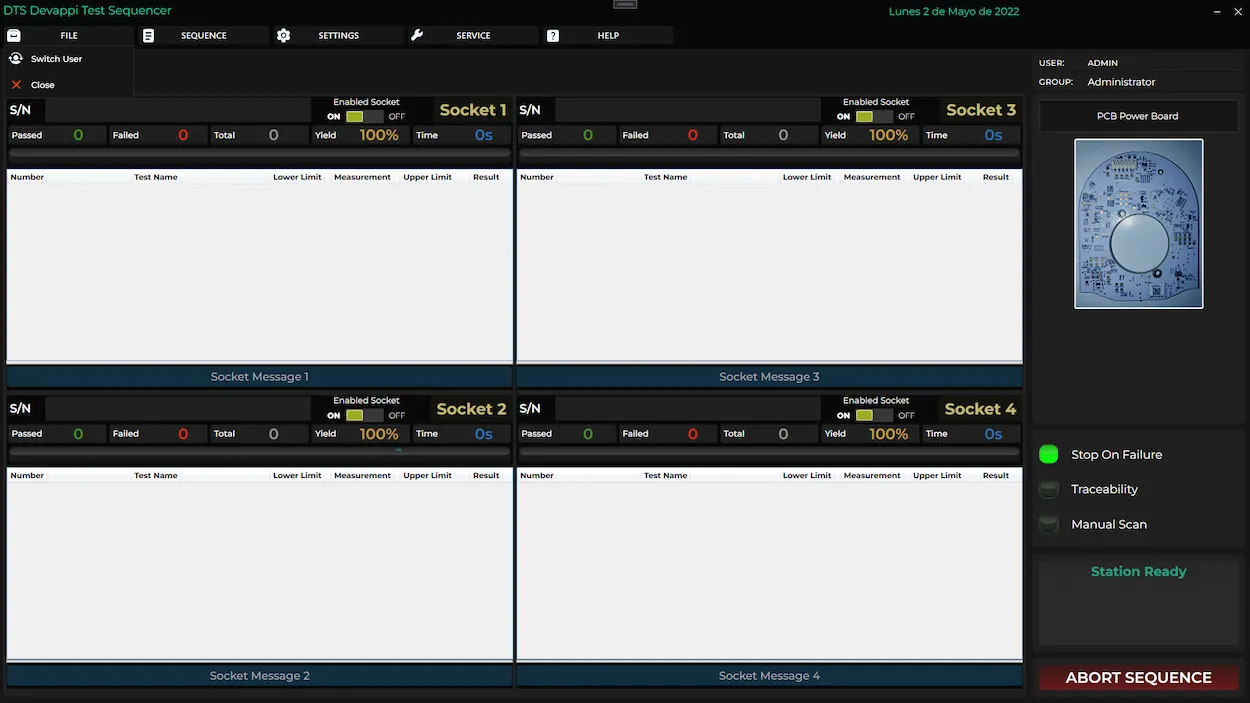
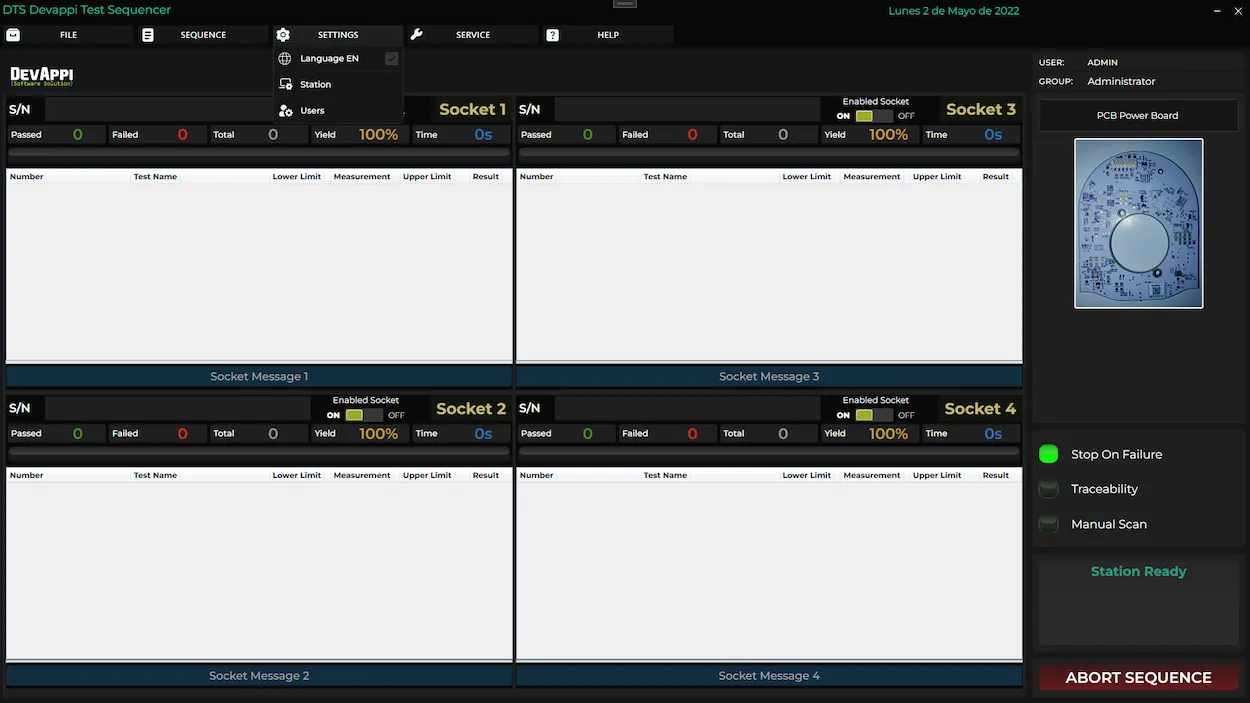
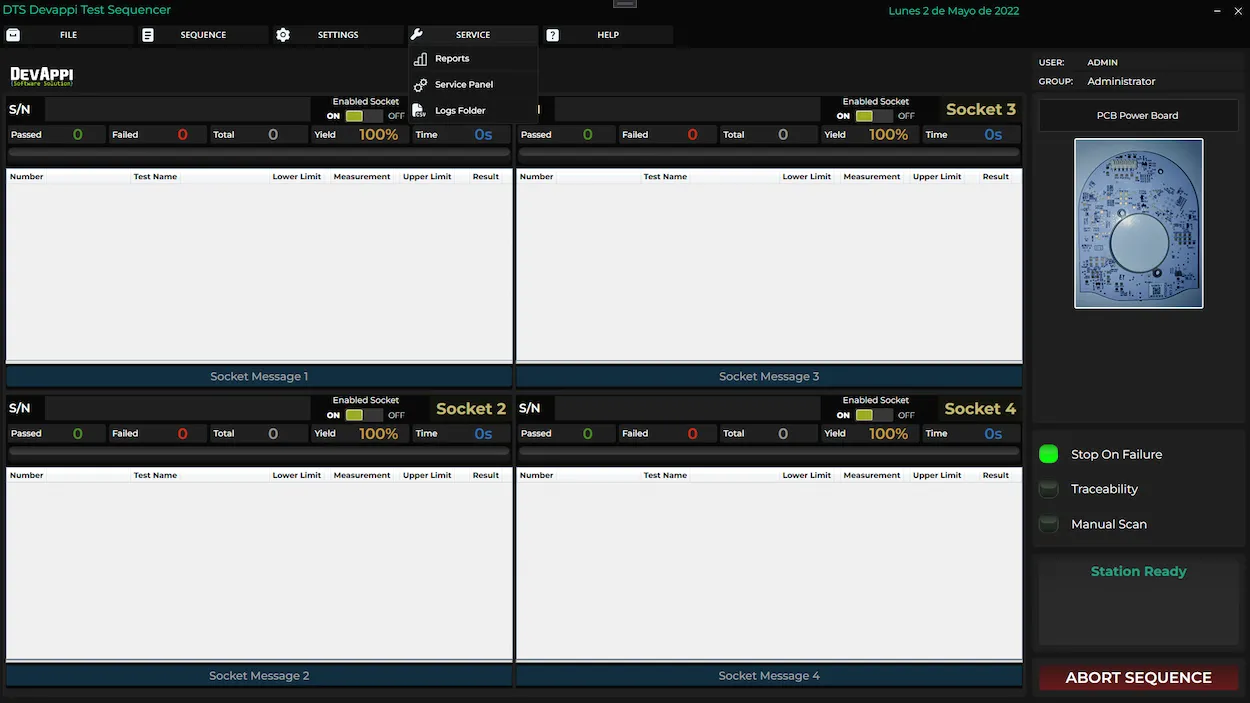
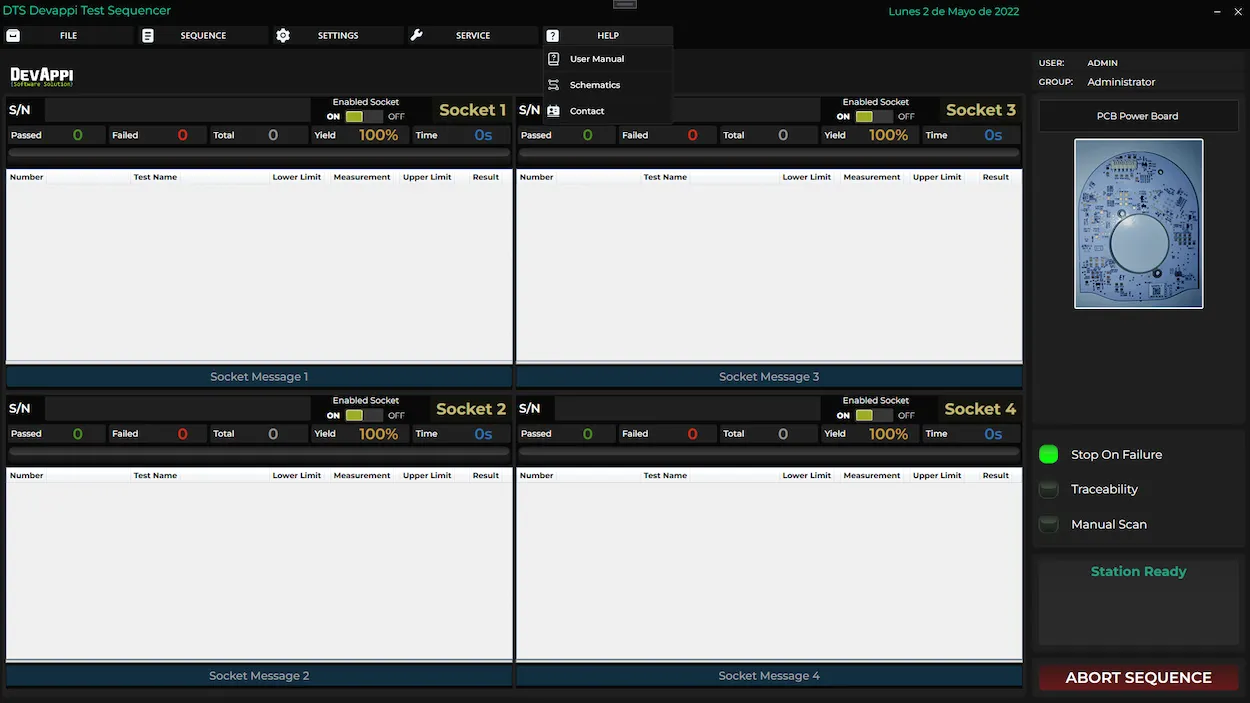
- ⚡Interactive WPF graphical user interface with real-time test progress feedback and visual indicators.
- ⚡Automated production data logging to database storage for quality assurance analytics.
05.IMPACT & RESULTS
- ✦Drastically reduced cycle times per unit tested on the assembly line.
- ✦Standardized pass/fail criteria, eliminating operator bias and diagnostic errors.
- ✦Automated test logging and quality analytics in a centralized database.
Technology Stack
- C#
- .NET Framework / WPF
- SQL
- MySQL
Source Code
GitHub Repository